Part of ENCORE
Full program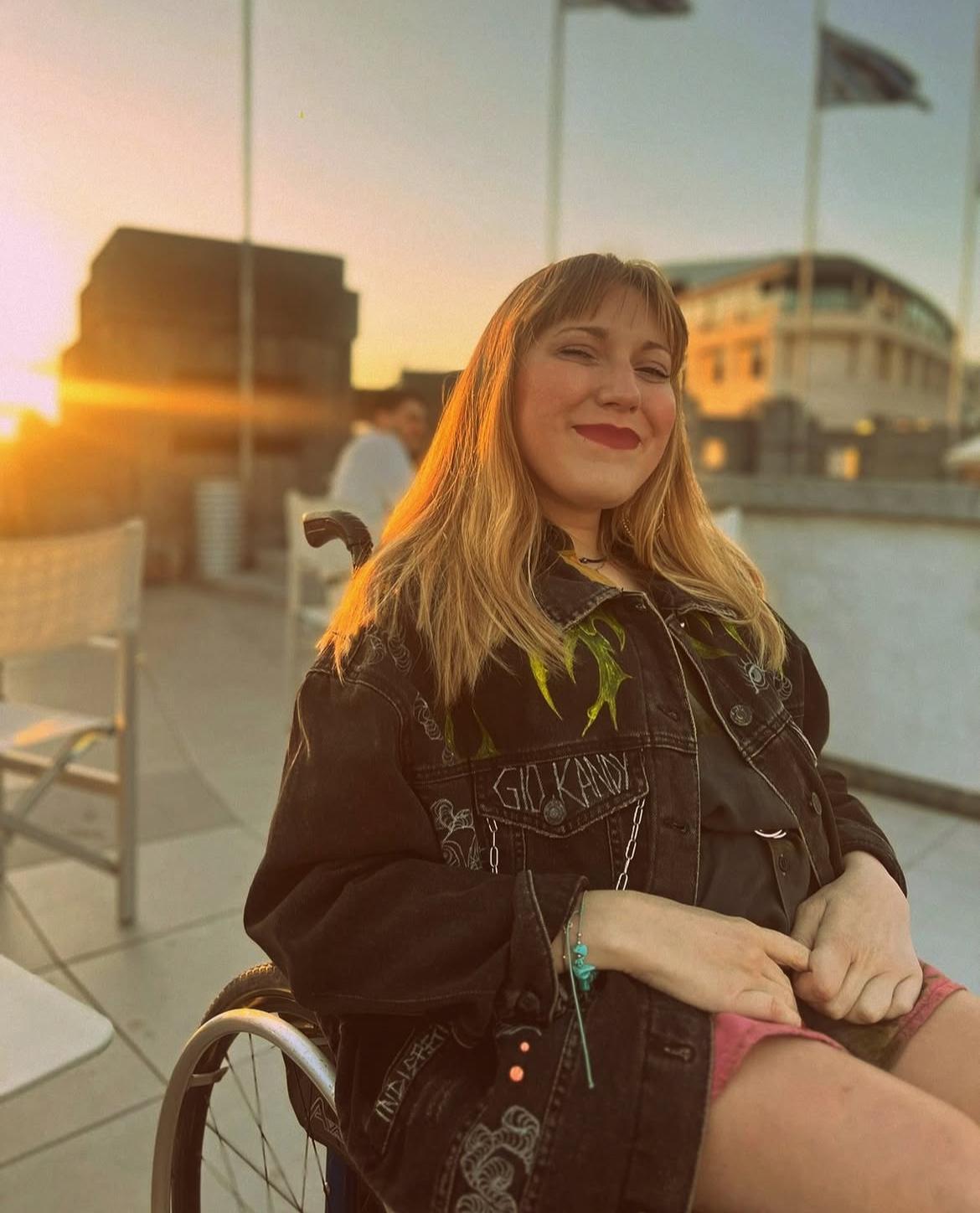
Antonella Candiago
Come Closer: Disability, Intimacy, Care and Desire
Come Closer: Disability, Intimacy, Care and Desire explores how we can rethink intimacy through the lens of disability justice. How can we understand bodily autonomy, communicate desires and boundaries, and recognise access needs as an essential part of intimacy? How can we build more accessible and affirming spaces that challenge ableist assumptions and the desexualisation of disabled people?
The workshop also invites participants to question the idea that interdependence is a weakness, instead exploring care, support, and mutual reliance as meaningful parts of intimate relationships.
Through discussion, performance, creative activities, and shared resources, participants explore the connections between disability, intimacy, care, and desire, with a focus on communication, consent, access needs, kink, and aftercare.
Participatory and playful activities invite participants to reflect on how we can create more inclusive, accessible, and pleasurable experiences of intimacy, challenging dominant narratives around bodies, sexuality, relationships, and care.
Antonella Candiago is a disability rights advocate working at the intersection of disability, gender, sexuality, and social justice. Drawing on lived experience and professional expertise, she promotes disability justice and sex-positive, intersectional approaches to bodies, desire, intimacy, relationships, and care. Her work focuses on disabled sexuality and intimacy, SRHR, sexuality education, and creating spaces where disabled people can claim autonomy, pleasure, connection, and self-determination.
See read more for more information on the structure of this event and the accessibility information.
Workshop structure
1. Welcome and creating an accessible space
- Short video screening / text reading
- Introduction
- Access check-in: reflecting on what helps us feel comfortable and present
- Overview of the workshop structure and available resources
2. Disability and Intimacy
- Exploring key concepts and connections: disability, sexuality, ableism, stereotypes, representation, and pleasure
3. Exploring access needs in intimacy (activity)
- Reflecting on what helps people feel safe, comfortable, and able to experience intimacy
- Imaging how intimacy can become more accessible and inclusive
4. Disability, desire, kink and communication (activity)
- Exploring sexual desire and kink as a topic connected to consent, negotiation, creativity, and self-expression
- Reflection game activity using images and questions
5. Aftercare and interdependence (activity)
- Exploring care, interdependence, and what happens after intense or vulnerable experiences – connection with collective care and disability justice
- Collective closing activity focused on connection and meaning of care and interdependence
6. ‘Pillow talk’ with Antonella
- Optional one-to-one “pillow talk” conversations, informal chats, or activities using tarot cards, images, prompts, and other creative materials, while others can chill, explore resources and creative materials, or rest.
- Curated music mix by aQRium.brussels
7. Closing
- Final reflections
- Sharing resources for further learning
Access notes
- You can participate by speaking, writing, listening, observing, or passing.
- There is no expectation to share personal experiences.
- Take care of your own needs during the workshop (movement, breaks, reduced stimulation, water, etc.).
- Different ways of communicating and participating are welcome.
Our goal is to create a space where different bodies, minds, identities, and experiences of intimacy are respected.
Tickets

Good to know
Who is disabled? Here, “disabled” is understood broadly and intersectionally. Disability can include physical, sensory, intellectual, cognitive, and psychosocial disabilities, as well as chronic illness, neurodivergence, mental health conditions, and other forms of impairment or access needs. Not everyone who experiences ableism or access barriers identifies as disabled, and we recognise that people may relate to these experiences in different ways. Neurodivergent people, people with mental health conditions, chronically ill people, and others may experience ableism or disabling barriers without using the label “disabled” for themselves. We also recognise that these experiences can overlap with one another and with other forms of marginalisation.